
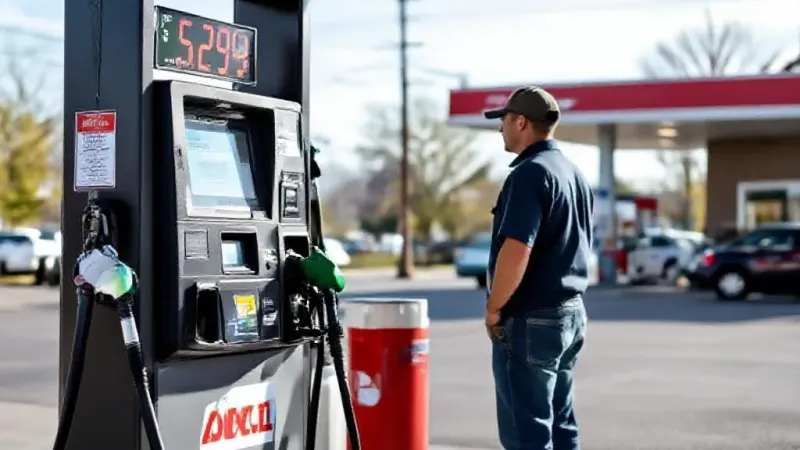
Terre Haute area residents and other Hoosiers who own diesel-powered vehicles are not receiving relief from state fuel tax suspensions, even as diesel prices reach historic highs. While gasoline prices have surged, diesel has surpassed $6 a gallon for the first time in U.S. history, impacting local commuters, farmers, and businesses.
For many, these rising costs present a significant financial burden. One young woman, living independently, reported paying $42 for less than half a tank for her diesel-powered VW Jetta, causing her considerable financial stress. Governor Mike Braun's state gas tax suspensions, which could amount to $1.1 billion in savings for motorists over eight months, do not apply to diesel purchases, leaving diesel owners without any direct state relief.
When questioned about the exclusion, Governor Braun stated that "Diesel is normally used by businesses. So, businesses versus households. That was the reason it wasn’t included," noting that the diesel price spike was only recent. He added that while diesel is a valid issue, it would likely have to wait for further consideration until after the midterms, predicting a change in dynamics then.
However, this explanation faces scrutiny from various Hoosiers. According to the Tax Foundation, Indiana currently has the fourth-highest diesel tax in the nation, at 64 cents per gallon. This is significantly higher than Indiana's gas tax of 37 cents per gallon. Federal and sales taxes are also added on top of these state taxes.
Braun's implication that suspending the diesel tax would not benefit individual residents contrasts with data from Indiana's Vehicle Fuel Dashboard, which shows 227,500 diesel vehicles registered in the state during 2025. While this represents about 4% of the overall number of vehicles, the percentage of diesel vehicles is reportedly growing, while gasoline-powered vehicle numbers are decreasing over time. Many individual Hoosiers, including farmers, rely on diesel pickup trucks, and some commuters drive diesel cars daily.
The impact of high diesel prices extends beyond individual vehicle owners to the broader economy. Many argue that higher diesel costs contribute to increased prices for goods and services across the state. For instance, one local trash service has seen its fuel surcharge rise by $1 in the last year, an increase of approximately 30%, which is applied to every customer's bill, largely due to the use of diesel-powered trucks.
Recent fuel price data from AAA illustrates the disparity in price increases: as of last Thursday, gasoline was hovering around $4.44 per gallon nationally, marking a 38% increase from $3.20 a year ago. In contrast, diesel reached an all-time high of $6.40 a gallon, representing a 72% increase from $3.71 a year ago. This significant difference highlights the heightened financial pressure on diesel vehicle owners, who are currently not benefiting from state tax relief measures.