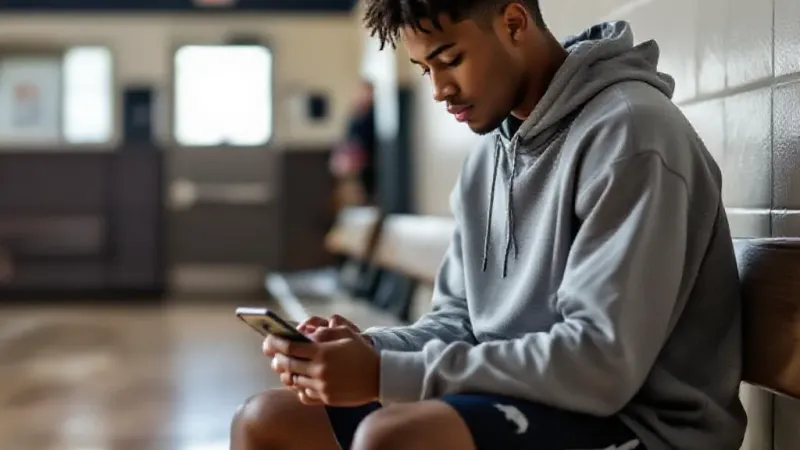
High school athletes in Indiana can now profit from their name, image, and likeness through "personal brand activities" authorized by the Indiana High School Athletic Association (IHSAA) in May, although state lawmakers appear unlikely to regulate the practice for the upcoming legislative session. The IHSAA reports 54 student athletes are already generating income from these deals, which range from multi-thousand dollar endorsement contracts to local business promotions.
TheThe IHSAA's framework for these deals, presented as a "tamer version" of collegiate NIL agreements, allows students to broker brand deals. However, strict rules are in place: athletes cannot appear in uniform or mention their team name in advertisements. Additionally, they are prohibited from promoting gambling, alcohol, tobacco, cannabis, illegal substances, sexually explicit content, or weapons. IHSAA Commissioner Paul Neidig emphasized the principle behind the change, stating, "Everyone owns their own name." The program aims to preserve the amateur status of high school sports.
Neidig told the Interim Committee on Education on Wednesday morning that some deals include a $5,000 contract for a cross-country athlete to wear New Balance sneakers, while others involve promotional endorsements for local businesses on Instagram or branded apparel sales where students receive a portion of profits. To maintain athletic eligibility, students must pass at least 70% of their classes.
Rep. Alex Burton (D-Evansville) initiated the study into high school NIL deals, having introduced a floor amendment on the topic last session. Burton highlighted the potential benefits, such as students learning financial management, entrepreneurship, and marketing skills. However, he also raised significant concerns regarding potential exploitation, the risk of transfers driven by financial incentives, the challenge of establishing consistent expectations across public, charter, and private schools, and ensuring that education remains the primary focus. Sen. Shelli Yoder (D-Bloomington) inquired about IHSAA support for families less familiar with securing promotional deals, aiming to ensure equitable access to benefits beyond students whose families have prior NIL experience.
Neidig acknowledged that support for families should ideally come from athletic departments and coaches, but noted that schools are currently struggling to recruit coaches due to increasing demands from parents and social media harassment. A critical aspect of the IHSAA's rules is the prohibition against coaches using deals to recruit students or booster clubs paying athletes to promote their schools.
When asked how closely IHSAA officials monitor student brand deals, Neidig explained that the association often learns of potential violations from community members. He noted the IHSAA's approach is to "fix it" first, rather than immediately imposing penalties or suspensions. Sen. Spencer Deery (R-West Lafayette) posed a hypothetical scenario where a car dealership offers $10,000 sponsorships to every quarterback at a specific high school. Neidig indicated such an arrangement "could be permissible" but would likely trigger an investigation into undue influence.
Neidig conceded that proving recruitment through brand deals could be difficult, as involved parties are unlikely to admit it. He clarified that all personal branding activities must be reported to their school so the IHSAA can monitor patterns and make adjustments if, for example, a local car dealership consistently sponsors all quarterbacks at one school over time.
Despite the immediate decision not to recommend legislation, the Interim Committee on Education informally asked the IHSAA to integrate financial literacy education for student athletes. Rep. Burton described the current situation as the "calm before the storm," anticipating that brand demand will increasingly push NIL opportunities down to the high school level. He expressed his intention to continue discussions in the next legislative session. A survey conducted by Burton earlier this year found strong parent support for investing personal branding activity money into college savings accounts or other investment vehicles.