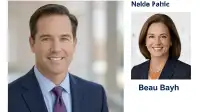
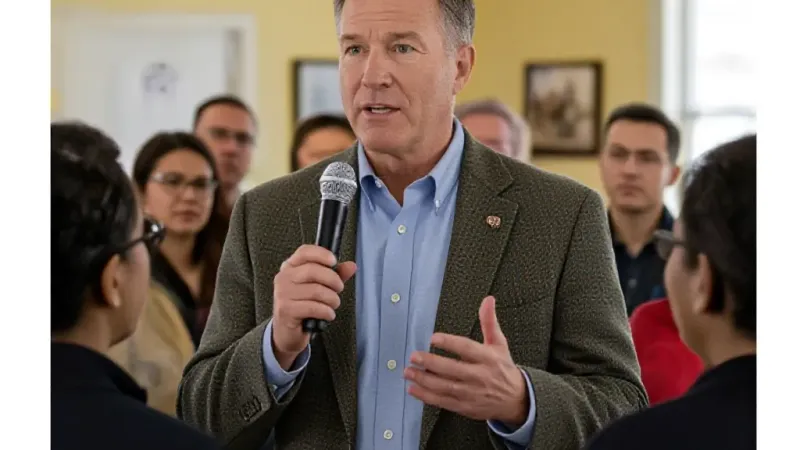
Greg Ballard, who previously served as the Republican mayor of Indianapolis, is now making an independent bid for Indiana Secretary of State. Ballard, who successfully ousted a popular Democratic mayor in 2007 despite being heavily outspent, aims to repeat what some have called Indiana’s biggest-ever political upset.
His current campaign, however, faces significant disadvantages in both funding and time. According to Campaign Manager Nathan Gotsch, most contributions this spring were dedicated to collecting the tens of thousands of signatures required for Ballard to appear on the ballot without a major political party's backing. For a statewide office, this requirement totals roughly 37,000 signatures from across Indiana, representing 2% of the vote in the last secretary of state race. Gotsch noted, “If we could have spent $840,000 on advertising instead of on help with signature collection, I think the race would be different today than it is right now.” Ballard himself called the signature collection process “completely unfair,” arguing it unfairly forced him to spend money on getting on the ballot.
Ballard announced his campaign in March, expressing a strong personal commitment to the office. He told the Capital Chronicle in March that while he had fended off requests to run for other positions like mayor, governor, or Congress, this role felt different. “My heart is in this one. I want to do this,” Ballard stated, emphasizing that other offices “just didn’t feel right to me. This one does.”
His background includes being born and raised in Indianapolis, earning an economics degree from Indiana University Bloomington, and serving two decades in the Marines, which included service in the Gulf War and earning a master’s degree in military science. He returned to Indianapolis in 2001, working in diagnostics and as a consultant before his mayoral run. Joseph Loftus, a Republican and retired attorney who led Ballard’s mayoral transition, recalled that while Ballard was initially seen as an “accidental mayor,” his military career instilled “uncanny political common sense.”
As mayor, Ballard often avoided partisanship, once saying in a 2007 TV ad, according to the Howey Political Report, that the election shouldn't be about Democrats or Republicans, but “about the future of our city.” He cultivated an administration based on merit, with Loftus noting that even some Democratic holdovers were “critical” to major initiatives, as there was no political “litmus test” for positions.
Ballard’s independent candidacy has reportedly caused concern among both Republican and Democratic parties in Indiana, including some former allies. Ballard told the Capital Chronicle that after being the “golden boy” as a Republican mayor in a Democratic city, he suddenly became “the devil” after announcing his independent run for secretary of state, despite believing he hasn’t changed. He aims to draw support from dissatisfied voters of both parties, contrasting his approach with the current outbound, scandal-plagued GOP Secretary of State Diego Morales. Ballard stated he believes he “can clean that place up nicely.”
His proposals for the office include banning the secretary of state from partisan actions such as endorsing, fundraising for, or donating to candidates while in office. He also advocates for an anti-partisan shakeup of the state’s recount and election commissions, improved training for county election workers, and a printed voter guide sent to all registered Hoosiers. This guide, customized to the precinct level and featuring candidate-submitted descriptions, is estimated to cost between $2.5 million and $3 million.
Ballard is also running under a new “Lincoln Party” label, with the goal of creating a pathway for future independent candidates to access the ballot without the current signature requirements. This effort has drawn criticism, particularly from GOP nominee Max Engling, for lacking a stated ideology or clear structure. However, Gotsch explained that the Lincoln Party recently released a statement of principles focusing on “ideals of American democracy,” “standards for governing in the public interest,” and “serving with integrity and humility.” Libertarian candidate Lauri Shillings described these as a “bare minimum standard” more akin to a code of conduct than a policy platform. Gotsch clarified that the Lincoln Party intends to operate with a different perspective, noting that current parties are based on “models from the 1800s” without sufficient innovation.
Campaigning for Ballard has been challenging due to the time spent collecting signatures. Jim Merritt, a Republican former state lawmaker who chaired Ballard’s mayoral campaign, suggested the initial financial and time drain “sure hurt him for the fall.” While major-party candidates began campaigning earlier, Ballard’s team spent from March through July focused on signature collection and certification. His first television ads began weeks behind his major-party opponents, and he has pledged to avoid negative campaigning.
Despite the hurdles, Republican strategist Robert Vane, a former deputy mayor under Ballard, sees the potential for another “perfect storm” similar to Ballard’s initial upset. Vane believes Ballard is running for the “right reasons,” noting he is not seeking to build a resume but to serve, having already achieved significant personal and public accomplishments.